Showing posts with label natural cures. Show all posts
Saturday, November 21, 2015
DIY: Naturally Antibacterial Foaming Hand Soap
Who loves foam soap as much as I do?? Something about those fluffy bubbles makes me (and my sticky-handed toddlers) so excited to wash my hands, and that's never a bad thing.
ππππππππ
The problem is that most store-bought foam soaps dry out your hands and contain icky artificial fragrances, not to mention they are quite pricey. Also, many contain triclosan, a nasty chemical that kills good bacteria and pollutes the earth. With kids in the house that are obsessed with bubbles, $5 for a single bottle of soap doesn't add up.
ππππππππ
So here's my favorite life hack right here... even better homemade foaming hand soap! With the addition of coconut oil and gentle castille soap, our hands are softer than ever. And at just pennies per bottle, I don't care how many times per day the little ones want to go bubble crazy. Plus, no icky chemicals: Lavender oil is naturally antibacterial and kills all the icky stuff while supporting a healthy immune system.
Find the recipe here on the doTERRA blog, and stock up on the essential oils you'll need to make your own here at my doTERRA shop.
πππππππ
Friday, December 5, 2014
How to Use Essential Oils Topically
Learning how to use essential oils topically is not as complex as it may seem. Although most essential oils can be used topically, HOW they are used will vary with different oils and skin types.
Topical application of oils allows them to quickly enter the bloodstream and circulate throughout the body. As the oils are applied and absorbed into the skin, the scent is inhaled giving off even more benefits (read: Aromatic Usage of Essential Oils).
Where Can Oils Be Use Topically?
Logic often dictates where to apply an essential oil. Most often, applying directly to the affected area is most effective. For instance, to relieve a headache, you would apply oil to the point of pressure. For skin rashes, apply to the effected area. Stomach pains or indigestion would call for direct application on the abdomen. Additionally, the soles of the feet and reflex points are great points of application.
Common Topical Application Methods
- Massage: Massage is an enjoyable way to use essential oils topically. Massaging the oils into joints, muscles, and tissues is relaxing and beneficial. Always move toward the heart when working on the arms and legs and avoid a heavy hand, or moving over the spine or other sensitive areas, with too much pressure.
- Energy Center Application: The chakras or energy centers of the body are simply fields of energy that are associated with balancing emotions, physical conditions, and our internal makeup. When the chakras are balanced, life is balanced. Read more about chakras and essential oils here.
- Reflex Points: Did you know that the largest pores in your body are on the soles of your feet? Apply oils to your feet allows quick and efficient absorbtion. This is also the gentlest option for using essential oils, especially for sensitive skin, children, or elderly. The feet especially are beneficial because of the large pores that will allow the oil to absorb quickly into the blood stream, but are tough enough to make the likelihood of irritation much less if your skin is prone to reactions. The reflex points of the hands and ears are also common and effective points of application (scroll down for images)
- Hot or Cold Compress: Soak a cloth or towel in cool water with drops of your favorite essential oil to place over the area of concern. Or wrap the cloth/towel in a hot water bottle to use as a warm compress.
- Bath: You can add essential oils to your bathwater, to your bath salts, or to a foot bath to soak in.
- Personal Care: You can use essential oils as a natural deodorant, as part of a skin care regimen, added to lotion or moisturizers, and so on.
Know your Skin Type
While many oils can be safely applied directly to the body, not all skin types are the same. Do you tend to have sensitive skin? Diluting your essential oils with coconut oil, lotion, or any oil that is safe for your skin will yield maximum benefits. Are you not sure? Test an area of you skin, perhaps your inner arm, before you apply anywhere else. Start with one drop, then increase slowly. And use one oil at a time, so that if you have a negative reaction, you know where the reaction comes from.
Topical Precautions
- Citrus oils can cause a sensitivity to the sun. It's usually recommended to avoid sunlight within 12 hours of applying topically
- Diluting never hurts. It doesn't negatively impact potency, and in fact, might increase the amount of oil absorbed (the carrier oil helps to prevent evaporation). Even if you've used an oil before without problems or don't consider yourself to have sensitive skin, you can still develop a reaction to it with excessive use over the same area of the body. Try to mix it up when possible and dilute as necessary.
- It's usually better to "layer" oils than to blend them. What this means is that if you're using 2 or more oils topically, apply one, then wait between 5-30 minutes and apply the other over it (instead of mixing a drop of each in your hand and then rubbing this into the skin). Mixing the oils is as much an art as it is a science, which is why we tend to stick to the blends doTERRA has already created, since we know they are safe and effective.
- Take extra care using essential oils on babies or children's skin as it is very sensitive. A 2-5% carrier dilution is appropriate.
Sources: Sustainable Baby Steps, Everything Essential
Balance Chakras with Essential Oils
All living things are created by energy and made of energy.
Seven chakras are positioned throughout your body, from the base of your spine to the crown of your head. Each chakra has its own vibrational frequency, color, and governs specific functions that keep your body, mind, and spirit functioning optimally.
You are energy.
Chakras, by definition, are energy centers within the human body that help to regulate all its processes, from organ function to the immune system and emotions. The ability for your energy centers to function optimally is what keeps you psychologically, emotionally, physically, and spiritually balanced.
The term chakra is Sanskrit for “wheel." These energy wheels transport life force energy throughout the body to promote balance from the inside out. When these wheels are spinning and distributing energy, you are balanced and healthy. When these chakras are blocked, they are unable to transport energy where it needs to go. (also read: Ayurveda and Essential Oils)
A blocked chakra can show in the form of emotional imbalance, mental problems, illness or physical pain, immune deficiency, and other forms of imbalance.
Balancing the chakras is a process that takes time, concentration, and dedication. You must work from the bottom up - beginning with the Root chakra moving upward and ending with the Crown chakra.
There are many approaches to balancing the chakras including yoga, meditation, acupuncture, and mantra to name a few. Essential oils can prove a powerful catalyst in achieving balance in the chakras. I use dΕTERRA Essential Oils because of their purity and potency. All of the essential oils mentioned below can be found here. Learn more about Essential Oils here.
The Root Chakra
Our foundation and feeling of being grounded
- Purpose: Survival, Security, Stability
- Location: Base of spine
- Signs of Imbalance: Fearful, Insecure, Confused, Constipation, Lower back pain - issues with legs, feet, knees, groin, hips, ankles - frequent illness
- Muladhara is the most instinctual of all chakras — it is your survival center.
- Color: Red
- Mantra: I am peaceful, protected and secure
- Essential Oils: Balance Grounding Blend (creates a sense of calm and well-being) Basil, Cedarwood, Cilantro, Myrrh, Patchouli, Vetiver, White Fir, On Guard, AromaTouch
- Apply topically to the bottoms of the feet and sacrum.
The Sacral Chakra
Our connection and ability to accept others and new experiences
- Purpose: Authentic Creation, Soul Fire, Sexuality
- Location: Lower abdomen, slightly below the navel
- Signs of imbalance: Sexual Problems or Dysfunction, Fear of Sexual or Emotional Intimacy, Infidelity, Needy or Wiithdrawn, Disorders of reproductive organs, infertility, urinary system, spleen, gallbladder, kidney, lack of flexibility
- Svadhishthana is the center of your creativity, desire, emotion, sexuality, and intuition.
- Color: Orange
- Mantra: I am radiant, beautiful and strong and enjoy a healthy and passionate life
- Essential oils: Citrus Bliss Invigorating Blend (elevates mood and reduces stress), Black Pepper, Cinnamon, Tangerine, Wild Orange, Bergamot, Clary Sage, Patchouli, Sandalwood, Ylang Ylang
- Apply topically below the navel.
The Solar Plexus Chakra
Our ability to be confident and in-control of our lives.
- Purpose: Power, Self Worth, Self Confidence
- Location: Upper abdomen in the stomach area, slightly above the navel
- Signs of Imblance: Low self-esteem or arrogance, Egotistical behavior, Feeling abandoned or rejected or feeling the world revolves around you, Difficulty understanding or controlling emotions, Rebellious or too eager to please, Nervous or Stressed out, Addictive behaviors including eating disorders, hypoglycemia, diabetes, eczema, acne, food allergies, chronic fatigue, depression, pancreas, gallbladder, liver issues
- Manipura guides you through life by creating a strong sense of self
- Color: Yellow
- Mantra: I am positively empowered and successful in all my ventures. I do not allow anger and emotions to control my life
- Essential oils: DigestZen (maintains healthy digestive system), Bergamot, Cassia, Clove, Coriander, Fennel, Ginger, Grapefruit, Juniper Berry, Wintergreen, Slim & Sassy, Black Pepper, Cedarwood, Cinnamon, Geranium, Cypress, Lemongrass, Peppermint, Ylang Ylang
- Apply topically below the sternum, above the stomach.
The Heart Chakra
Our ability to love.
- Purpose: Love, Joy, Inner Peace
- Location: Center of chest
- Signs of Imbalance: Unable to Give or Receive Unconditional Love, Selfish, Jealous, Hateful, Grief Stricken, Excessive Loneliness, Depression, Disorders or the heart, lungs, thymus, breasts, arms, premature aging, upper back pain, circulation problems, asthma, immune system deficiency
- Anahata creates vulnerability, anxiety and dependency but also unconditional love and self love
- Color: Green
- Mantra: I give and receive love effortlessly and unconditionally
- Essential oil: Breathe Respiratory Blend (soothes airways and promotes clear breathing), Eucalyptus, Geranium, Lime, Marjoram, Melaleuca, Peppermint, Rose, Thyme, Ylang Ylang, Serenity, Elevation, Lavender, Melissa, Sandalwood
- Apply topically to the center of the chest at heart level.
The Throat Chakra
Our ability to communicate.
- Purpose: Communication, Speaking the Truth, Holdings Secrets
- Location: Center of the Neck/Throat
- Signs of Imblance: Poor Communication Skills, Afraid to Speak Up/Represses Feelings, Uncontrolled Verbal Outbursts, Deceitful, Manipulative, Shy or Talks Excessively, Unable to Listen, Fear of offending others, gossiping, loud or dominating voice, tendency to interrupt
- Vishuddha is also linked to our ability to hear – both physically and intuitively; the connection between our sense of who we are inside and how we represent ourselves out in the world
- Color: Light Sky Blue
- Mantra: My thoughts are positive, and I always express myself truthfully and clearly
- Essential oils: Whisper, Lavender, Oregano, Birch, Basil, Bergamot, Roman Chamomile, Peppermint
- Apply topically to the posterior neck and the base of the occipital ridge
Third Eye Chakra
Our ability to focus on and see the big picture.
- Purpose: Intuition, Imagination, Wisdom, Ability to Think & Make Decisions
- Location: Forehead between the eyes
- Signs of Imbalance: Non-sympathetic/Empathetic, Judgemental, Over Intellectualizing, Lacks Intuition, Lacks Common Sense, Forgetful, Sleep/Dream/Nightmare Issues
- Ajna is the center of balanced intuition, psychic power, and the energies of the spirit
- Color: Deep Dark Blue
- Mantra: I forgive the past and learn what was there for me to learn. I seek to understand and to learn from my life experiences
- Essential oils: Frankincense, Clary Sage, Lemongrass, Immortelle, In Tune, PastTense, Cypress, Helichrysum, Marjoram, Patchouli, Rosemary, Sandalwood, Vetiver
- Apply topically to the middle of the forehead and above the eyebrows.
The Crown Chakra
Our ability to be fully connected spiritually, deeper understanding of ourselves beyond the physical or material.
- Purpose: Cognition, Connections to Spirituality & Higher Self, Life Purpse
- Location: The very top of the head
- Signs of Imbalance: Unspiritual, Feelings of Unbalanced Spirituality, Excessive Fear of Death, Unclear of Life or Spiritual Purpose, Feeling Alone in the Universe or Posessing a God-Complex, Feeling Unloved by or Angry at our Creator, Dementia, autoimmune disorders, epilepsy, coma, amnesia, migraines, brain tumors, cognitive delusions
- Sahasrara is the center for trust, devotion, inspiration, happiness, and positivity
- Color: Violet
- Mantra: I cherish my spirit. I seek experiences that nourish my spirit. I am at peace
- Essential Oils: Frankincense, Helichrysum, Lemon, Melissa, Roman Chamomile, Rosemary, Sandalwood, Zendocrine
- Apply to the crown of the head.
Sources: In Love With Oils, Chakras
Tuesday, December 2, 2014
Essential Oils 101: What to Know & Why Care?
I used to think the same thing, I had NO IDEA that essential oils were valuable resources for health and wellness, as well as emotional support, skin care, and cleaning & household needs.
We've heard the old, old story of the three wise men bringing frankincense and myrrh to baby Jesus... makes you wonder if the 'wise men' were really all that wise. What kind of baby shower gifts are those, after all? And what in the world would new mother do with them?
Since discovering the power of essential oils in my own life, my opinion of the wise men greatly improved. It was actually a genius idea. But what are essential oils, anyway? And why would any of us care?
Essential oils are the naturally occurring aromatic chemical compounds found in plants, flowers, roots, bark and seeds. You’ve most likely experienced the aromatic qualities of many essential oils if you’ve ever enjoyed the fragrance of a flower garden, or freshly chopped herbs. But essential oils are much more than a fragrance. They actually serve to protect the plants from disease (strengthening the plants immune system) and even aid in pollination, oxygenation and regeneration. Essential oils are considered the ‘life blood’ of the plant, and for good reason.
Essential oils (EO) are fat soluble, water-based phytochemicals. They don’t contain any fatty lipids or acids (such as are found in vegetable and animal oils), so they don’t leave a ‘greasy’ residue (or stain). They’re immediately absorbed into the skin, when the skin comes in contact with the EO. Read more about topical use of Essential Oils here.
The water-based characteristics of EOs allow them to penetrate cell walls. Why this is important: Have you ever been to the doctor and been told you have a virus, so you’ll just have to ride it out? This is because viruses also penetrate cell walls, but synthetic medications can’t. Modern medicine doesn’t have a way to deal with a common cold because of this fact. But, EOs penetrate the cell wall and attack the virus.
(Because of their water-soluble properties, an essential oil can travel to every cell in the body within just a few minutes.)
Essential oils, by nature, have a strong odor associated with them. Besides smelling nice (usually—not all of them have a pleasant aroma), they can clean the air, destroying both odors and toxins.
Read more about The Power Of Scent here.
Essential oils are antioxidants that contain oxygen molecules to help carry important nutrients to the cells that need them. Antioxidants help destroy free radicals. They prevent mutations, fungus and oxidation of cells as they work as free radical scavengers in the body.
EOs are antibacterial, antifungal, anti-infectious, anticancer, antimicrobial, antiviral, antiparasitic, and antiseptic. In testing, EOs destroyed all bacteria and viruses, while restoring balance to the body at the same time. Read: Essential Oils for Flu Season
Some essential oils (such as frankincense, sandalwood, myrrh and others) contain sesquiterpene molecules which are able to penetrate the blood-brain barrier. They give oxygen to cells and help erase and/or deprogram scrambled DNA codes. (This is why they’re thought to be helpful against cancer because they can erase the miswritten cancer cells codes while delivering oxygen to those cells—cancer cells can’t survive in).
The American Medical Association (AMA) determined that if they could find an agent that could pass through the blood-brain barrier, they would be able to cure Alzheimer’s disease, Lou Gehrig’s, Multiple Sclerosis, and Parkinson’s disease.
This blood-brain barrier passage also helps with brain trauma such as seizures and helping to release emotional trauma.
Essential oils are very complex. In fact, many of the chemical constituents that make up the different EOs have yet to be identified. For example, an EO can easily contain 800 different compounds, with only 200 of them identified by science.
This diverse complexity aids EOs in their effectiveness by making it difficult, if not impossible, to build up an immunity to a specific oil. (Unlike the simple compounds found in synthetic medications that easily allow for addiction and immunity build up which greatly distracts from they’re effectiveness.)
Essential oils aid the body not only in fighting disease and healing it, but also in detoxing the body afterwards.
Unlike most medicines on the market that have an expiration date, essential oils will remain viable for years, if not forever, as long as they’re properly cared for (kept in dark, sealed bottles, out of extreme heat). How many times have you had to throw out medicines or vitamins because of their expiration? With EOs that’s not a problem! (There are a few exceptions, mainly any oils with citrus in them, which will last for years, but not indefinitely).
To obtain essential oils from a plant or other natural source, they must go through a distillation process. The process itself, if done improperly, will destroy the health benefits of the oil. For example, many EOs are used in the cosmetic industry, but distilled by extreme heat (which is easier and cheaper). This process retains the scent, yet destroys any therapeutic value. The distillation process must contain low temperatures and a steam process to be effective for anything other than a nice smell.
Once the EO of the plant is extracted, it becomes a highly concentrated substance, up to 50-70% more concentrated than if you’d dried the plant or herb and used it that way. (For example, one drop of peppermint EO is as concentrated as 28 cups of peppermint tea). A little oil goes a long way. (As a matter of fact, one drop contains around 40 million-trillion molecules because they are super concentrated and extremely tiny.)
There are several different grades (qualities) of essential oils available on the market. The most common grade is synthetic. This is often the essential oils that are used for perfumes and other health and beauty products. This grade of oil can be a mix of natural EOs and chemicals, with other additives. The EOs are extracted in the cheapest (heat) way possible, destroying the therapeutic benefits of the oils while retaining the aromatic qualities.
The second largest grade of EOs is food grade. These oils are used for flavorings in food, without any concern over the therapeutic qualities of the oils. These also can contain chemicals and almost always are cut with a carrier of some sort, to ‘stretch’ the oil (remember, they’re very concentrated in and of themselves, so even cutting them with oil or alcohol can still makes them seem ‘strong’ to the smell).
A much smaller percentage of essential oils are considered therapeutic grade. These oils, while still potentially cut with other fillers, are much safer to ingest than the synthetic or food grade oils.
The smallest grade of oil is considered Certified Pure Therapeutic Grade (CPTG), and make up only about 1% of the essential oils available on the market. These oils are certified to contain ONLY the essential oils from plant, nothing more, nothing less. Each batch of oil is tested by 3rd party labs to ensure the purity.
Since discovering the power of essential oils in my own life, my opinion of the wise men greatly improved. It was actually a genius idea. But what are essential oils, anyway? And why would any of us care?
Naturally Occurring Aromatic Compounds Found in Nature
Essential oils are the naturally occurring aromatic chemical compounds found in plants, flowers, roots, bark and seeds. You’ve most likely experienced the aromatic qualities of many essential oils if you’ve ever enjoyed the fragrance of a flower garden, or freshly chopped herbs. But essential oils are much more than a fragrance. They actually serve to protect the plants from disease (strengthening the plants immune system) and even aid in pollination, oxygenation and regeneration. Essential oils are considered the ‘life blood’ of the plant, and for good reason.
Fat Soluble and Water-Based
Essential oils (EO) are fat soluble, water-based phytochemicals. They don’t contain any fatty lipids or acids (such as are found in vegetable and animal oils), so they don’t leave a ‘greasy’ residue (or stain). They’re immediately absorbed into the skin, when the skin comes in contact with the EO. Read more about topical use of Essential Oils here.
The water-based characteristics of EOs allow them to penetrate cell walls. Why this is important: Have you ever been to the doctor and been told you have a virus, so you’ll just have to ride it out? This is because viruses also penetrate cell walls, but synthetic medications can’t. Modern medicine doesn’t have a way to deal with a common cold because of this fact. But, EOs penetrate the cell wall and attack the virus.
(Because of their water-soluble properties, an essential oil can travel to every cell in the body within just a few minutes.)
Aromatic
Read more about The Power Of Scent here.
Powerful Antioxidants
Essential oils are antioxidants that contain oxygen molecules to help carry important nutrients to the cells that need them. Antioxidants help destroy free radicals. They prevent mutations, fungus and oxidation of cells as they work as free radical scavengers in the body.
Destroys Bacteria and Viruses
EOs are antibacterial, antifungal, anti-infectious, anticancer, antimicrobial, antiviral, antiparasitic, and antiseptic. In testing, EOs destroyed all bacteria and viruses, while restoring balance to the body at the same time. Read: Essential Oils for Flu Season
Blood-Brain Barrier
Some essential oils (such as frankincense, sandalwood, myrrh and others) contain sesquiterpene molecules which are able to penetrate the blood-brain barrier. They give oxygen to cells and help erase and/or deprogram scrambled DNA codes. (This is why they’re thought to be helpful against cancer because they can erase the miswritten cancer cells codes while delivering oxygen to those cells—cancer cells can’t survive in).
The American Medical Association (AMA) determined that if they could find an agent that could pass through the blood-brain barrier, they would be able to cure Alzheimer’s disease, Lou Gehrig’s, Multiple Sclerosis, and Parkinson’s disease.
This blood-brain barrier passage also helps with brain trauma such as seizures and helping to release emotional trauma.
Complex
Essential oils are very complex. In fact, many of the chemical constituents that make up the different EOs have yet to be identified. For example, an EO can easily contain 800 different compounds, with only 200 of them identified by science.
This diverse complexity aids EOs in their effectiveness by making it difficult, if not impossible, to build up an immunity to a specific oil. (Unlike the simple compounds found in synthetic medications that easily allow for addiction and immunity build up which greatly distracts from they’re effectiveness.)
Detoxifying
Essential oils aid the body not only in fighting disease and healing it, but also in detoxing the body afterwards.
Don’t Expire
Unlike most medicines on the market that have an expiration date, essential oils will remain viable for years, if not forever, as long as they’re properly cared for (kept in dark, sealed bottles, out of extreme heat). How many times have you had to throw out medicines or vitamins because of their expiration? With EOs that’s not a problem! (There are a few exceptions, mainly any oils with citrus in them, which will last for years, but not indefinitely).
How Essential Oils are Extracted?
To obtain essential oils from a plant or other natural source, they must go through a distillation process. The process itself, if done improperly, will destroy the health benefits of the oil. For example, many EOs are used in the cosmetic industry, but distilled by extreme heat (which is easier and cheaper). This process retains the scent, yet destroys any therapeutic value. The distillation process must contain low temperatures and a steam process to be effective for anything other than a nice smell.
Once the EO of the plant is extracted, it becomes a highly concentrated substance, up to 50-70% more concentrated than if you’d dried the plant or herb and used it that way. (For example, one drop of peppermint EO is as concentrated as 28 cups of peppermint tea). A little oil goes a long way. (As a matter of fact, one drop contains around 40 million-trillion molecules because they are super concentrated and extremely tiny.)
Essential Oil Grades
There are several different grades (qualities) of essential oils available on the market. The most common grade is synthetic. This is often the essential oils that are used for perfumes and other health and beauty products. This grade of oil can be a mix of natural EOs and chemicals, with other additives. The EOs are extracted in the cheapest (heat) way possible, destroying the therapeutic benefits of the oils while retaining the aromatic qualities.
The second largest grade of EOs is food grade. These oils are used for flavorings in food, without any concern over the therapeutic qualities of the oils. These also can contain chemicals and almost always are cut with a carrier of some sort, to ‘stretch’ the oil (remember, they’re very concentrated in and of themselves, so even cutting them with oil or alcohol can still makes them seem ‘strong’ to the smell).
A much smaller percentage of essential oils are considered therapeutic grade. These oils, while still potentially cut with other fillers, are much safer to ingest than the synthetic or food grade oils.
The smallest grade of oil is considered Certified Pure Therapeutic Grade (CPTG), and make up only about 1% of the essential oils available on the market. These oils are certified to contain ONLY the essential oils from plant, nothing more, nothing less. Each batch of oil is tested by 3rd party labs to ensure the purity.
Why does this matter?
For one, the general practices in the essential oil industry allows for things like bottle labels to say “100% pure oil” even if only 10% of that is essential oils, or even if the field of plants was sprayed with a chemical before harvesting. Because of this, if you plan on using essential oils internally, it’s important to pay attention to your source.
It often takes a massive amount of plant material it takes to obtain a pure essential oil, which is why so many companies practice diluting the oils in order to ‘stretch’ the amount of oil they have. To give you an example of quantities, consider Melissa oil, which is made from lemon balm. It takes 3 tons of plant material to extract one pound of pure essential oil. That one pound of pure oil sells between $9,000-15,000. You can see, then, how tempting it would be to double that pound of oil by adding filler oils (such as coconut or almond oil), and reducing your cost by nearly 50%. Often, there’s no way for a consumer to know if the oil they purchased is pure and un-diluted or not because the label says, 100% oil…but, what KIND of oil is it?
Because of the many ways to obtain EOs, it’s important to know the source from which you’re obtaining your oils since you can’t always trust the label.
The good news, though, is that there are companies out there with 100% certified pure, therapeutic grade oils. They, however, make up only a small portion of the oils available to consumers, so be careful who and where you buy oils from (just because you buy it at a health food store doesn’t make it safe).
Throughout history, EO’s have played an important part in health and healing and they are making a strong come back in an age where medicines are failing, health systems are failing, many are left uninsured, addicted, suffering from side effects, or in chronic pain. Although essential oils can’t ‘fix’ everything, they can help many, many things for a fraction of the cost, without side effects and sometimes with the healing people have been unable to obtain from other, traditional avenues.
If you’re interested in buying certified pure therapeutic grade oils at a wholesale discount, follow these step-by-step directions to get started.
It often takes a massive amount of plant material it takes to obtain a pure essential oil, which is why so many companies practice diluting the oils in order to ‘stretch’ the amount of oil they have. To give you an example of quantities, consider Melissa oil, which is made from lemon balm. It takes 3 tons of plant material to extract one pound of pure essential oil. That one pound of pure oil sells between $9,000-15,000. You can see, then, how tempting it would be to double that pound of oil by adding filler oils (such as coconut or almond oil), and reducing your cost by nearly 50%. Often, there’s no way for a consumer to know if the oil they purchased is pure and un-diluted or not because the label says, 100% oil…but, what KIND of oil is it?
Where to Get Essential Oils
Because of the many ways to obtain EOs, it’s important to know the source from which you’re obtaining your oils since you can’t always trust the label.
The good news, though, is that there are companies out there with 100% certified pure, therapeutic grade oils. They, however, make up only a small portion of the oils available to consumers, so be careful who and where you buy oils from (just because you buy it at a health food store doesn’t make it safe).
Throughout history, EO’s have played an important part in health and healing and they are making a strong come back in an age where medicines are failing, health systems are failing, many are left uninsured, addicted, suffering from side effects, or in chronic pain. Although essential oils can’t ‘fix’ everything, they can help many, many things for a fraction of the cost, without side effects and sometimes with the healing people have been unable to obtain from other, traditional avenues.
If you’re interested in buying certified pure therapeutic grade oils at a wholesale discount, follow these step-by-step directions to get started.
Originally posted on Creating Health from Scratch
How Do Essential Oils Work? The Power of Scent
Essential oils are the naturally occurring aromatic chemical compounds found in plants, flowers, roots, bark and seeds. You’ve most likely experienced the aromatic qualities of many essential oils if you’ve ever enjoyed the fragrance of a flower garden, or freshly chopped herbs. But essential oils are much more than a fragrance. They actually serve to protect the plants from disease (strengthening the plants immune system) and even aid in pollination, oxygenation and regeneration.
Essential oils are considered the ‘life blood’ of the plant, and for good reason. Essential oils are literally a plant's natural medicine against bacteria, viruses, and diseases that attack its cells. These extracts from plants are 50 to 70 times more powerful than herbs.
It's important to realize our bodies and plants have very similar building blocks. So, when we take these essential oils into our bodies they are in a familiar environment and they go to work on our behalf just as they would for the plant, killing bacteria, inhibiting virus reproduction, cleansing toxins, destroying parasites, oxygenating our cells and boosting our immune system.
Today we will be exploring the benefits of using essential oils aromatically - the most widely recognized benefit of essential oils. Don't forget to read about the topical ad internal benefits of essential oils.
Aromatic Benefits of Essential Oils
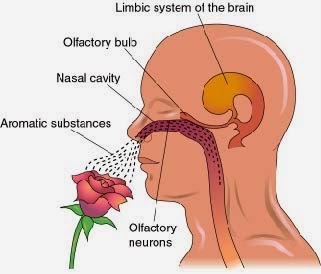
Essential oils, by nature, have a strong odor associated with them. Besides smelling nice, they can clean the air, destroying both odors and toxins. A whiff of lavender releases feel-good hormones and makes us happier, and a hint of eucalyptus improves alertness. Smells can impact many things in our lives, from dreams and emotions, to stress, pain, concentration, memory and romance.How Does It Work?
When essential oils are inhaled, they enter the body via the olfactory system, which has a direct connection to the limbic system in the front of the brain. The limbic system is known as the primitive brain and it encircles the top of the brain stem and forms a border linking cortical and midbrain areas with lower centers that control automatic, internal body functions.
It is associated with feelings such as hunger, thirst, anger, sadness, sexual arousal and pleasure. It is also associated with creativity, learning and memory. This is one of the reasons why so often something that we smell will trigger a memory or remind us of something or someone. (Source: Aroma-Pure)
Dreams
Experiencing floral smells before sleep, such as lavender and chamomile, can lead to more positive dreams. In research at the Sleep Disorders Centre of the University of Heidelberg, men and women were exposed to either the smell of flowers or hydrogen sulphide, or to no smell at all. Results show that the emotional content of subsequent dreams was linked to the smell. Those who had the floral smell had significantly more pleasant dreams than those who had no smell and the people exposed to the sulphur smell had the most negative dreams. Researchers are now looking at whether pleasant smells could reduce the risk of nightmares.Insomnia and Stress
Clinical trials have shown that the smell of lavender can help in insomnia, anxiety, stress, and post-operative pain, according to a report from Maryland University. "There is now scientific evidence to suggest that aromatherapy with lavender may slow the activity of the nervous system, improve sleep quality, promote relaxation, and lift mood in people suffering from sleep disorders," say the researchers. A study at Tubingen University in Germany shows that vanilla fragrance has a calming effect, while a Thailand study showed the smell from roses reduces both breathing rate and blood pressure.Concentration
Peppermint and lavender have been found to aid in concentration. Spraying the scent of lavender during factory tea breaks in Japan has been shown to improve post-break production. Athletes who sniffed peppermint ran faster and had better concentration than those who had no smell.Memory
Smells are very powerful triggers of specific memories, and are used in therapy to help recover lost memories. Research at Toronto University shows that memories triggered by smells tend to be clearer, more intense and more emotional. One theory is that this is because the part of the brain that processes smell has direct links with parts that are involved in emotion and memory.Blood Sugar Levels
In a study carried out at Cardiff University, insulin was injected into healthy men once a day for four days and their blood glucose levels fell. Each time they were injected, they were exposed to a smell, but on the fifth day the men were just given the smell... and their blood glucose still fell.
Studies can be cited from the original source at saga.co.uk
doTERRA Wholesale Account: Step-By-Step Sign-up
Are you ready to...
- Learn how to use essential oils?
- Provide natural health options for your family?
- Take control of your health naturally?
- Be more self-reliant with your health?
- Soothe your children quickly and effectively?
Getting wholesale prices on therapeutic grade essential oils has never been easier. You can get started quickly & easily online by following the steps below:
Opening a Wholesale Account
- Click this link to take you to the simple registration page.
- Begin by picking your country and language.
- Once you’ve selected your country, select “Wholesale Prices”
- Fill out your name, address, billing address, shipping address and remaining contact info.(Don’t’ be alarmed when doTERRA asks you to list your Tax ID number or SSN. This is for tax purposes only. You are opening a Wholesale Account giving you the ability to generate income. If you make over $600/year, you will receive a 1099 form in the mail, as is required by law. I promise you doTERRA will never share this info with anyone!)
- The “Enroller ID” and “Sponsor ID” boxes should already be filled in for you but if not, enter 854405 in both boxes.
- Select your time zone and your own virtual office password.
- Agree to the basic Terms and Conditions and your Virtual Office User Agreement. Click “Continue”.
- Select your initial order, meaning, your $35 Introductory Packet plus the first products you’d like to choose a la carte by typing in the names of the oils or products. OR – pick an ENROLLMENT KIT and your wholesale fee is waived!
Benefits of Wholesale Account
- 25% discount off of retail prices
- Earn 10%- 30% back on your qualifying orders when you participate in the Loyalty Rewards Program (optional but highly recommended)
- Enrollment fee is only $35 - or FREE if you purchase an enrollment kit.
- Low $25 renewal fee. dΕTERRA will send you a free bottle of peppermint upon renewal.
- Special members-only promotions.
- Online account access to manage your orders.
- Products ship directly from dΕTERRA.
- Access to an amazing business opportunity (not required but highly recommended).
- Access to private team Facebook pages (This is an amazing resource!)
- Essential Oil Education
- Exclusive Business Training with a Generous Compensation Plan
You can enjoy wholesale membership without any strings attached – No requirements to buy or sell. I like to compare it to a Costco or Sam’s Club membership.
Questions? Shoot me a message using the contact form or leave a comment below.
Feel Good & Be Well
XO
Wednesday, November 26, 2014
Ayurveda and Essential Oils
Ayurveda is a natural healing philosophy with roots in Indian culture, based on early literature from the Vedic period. Over the centuries, ayurvedic practitioners have developed medicinal procedures based on this philosophy.
Ayurveda is based on 5 elements including Ether, Earth, Water, Fire, and Air that compose both the human body and the world around us. These elements are grouped together to create three Doshas. Doshas are important because when they are in balance, the body will be healthy. When they are unbalanced, the body will be out of balance and less healthy.
Ayurvedic theory suggests that each human possesses a unique combination of the doshas and that they define the person’s character and attributes. Think of it as the grandfather philosophy of all of the personality type studies in modern times.
Once you know your dosha, you can begin to help keep yourself in balance through following the aryuvedic principles for proper eating, exercise, meditation, and essential oils.
Pitta Dosha: Associated with the elements of fire and water, pittas are passionate and intense. They have a joyful disposition but they are subject to anger, jealousy, and short tempers when unbalanced. There is often a need to cool off and clarity the mind.
If you are a Pitta type, you may need calming and cooling oils to keep the fire element balanced. Oils such as Sandalwood, Ylang Ylang, and Lavender would be great for cooling and calming. Oils such as Grapefruit, Sweet Orange, and Lavender would be good for a refreshing massage. doTERRA’s Citrus Bliss Blend and Serenity Blend would be perfect for the Pitta type. As well as Lavender single oil. Find your essential oils here.
Vata Dosha: Associated with the elements of ether and air, vata types are quick thinking, thin, and fast moving. They are active and creative and have a natural ability to communicate. When unbalanced, vatas can have high anxiety and fast moving emotions.
If you are the Vata type, you may need oils that help to ground, balance, and warm your dosha. Oils such as basil, cypress, frankincense, geranium, and rosewood will help the vata stay balanced. doTERRA’s Whisper Blend and Balance Blend as well as Geranium single oil would be a good fit for Vata types. Add these oils to your routine.
Kapha Dosha: Associated with the elements of earth and water, kappa types are patient, forgiving and slow to anger. They are loving and become easily attached. When they are unbalanced, kaphas can become lazy or stubborn as well as greedy.
If you are the Kapha type, you may need oils to help help lift and stimulate. Oils such as rosemary, eucalyptus, marjoram, melissa, lemon, peppermint would help you stay balanced. doTERRA has two great blends for the Kapha type. Elevation Blend to lift you up and Breathe Blend to clear the air passages. Grapefruit single oil would also be an excellent to help with balance. All three of these oils can be found here.
Get wholesale prices on doTERRA essential oils and other natural wellness products including supplements, weight management, and natural beauty products.
Original content found at Essential Yoga Program.
Wednesday, July 2, 2014
Sunburn Relief Spray with Essential Oils
Tis the season for fun in the sun, which also means sunburn is likely to follow.
Sunburn can put a major damper on summer plans, but it doesn't have to. Try this DIY blend for sunburn relief with essential oils.
Here's what you'll need:
Sunburn can put a major damper on summer plans, but it doesn't have to. Try this DIY blend for sunburn relief with essential oils.
DIY Sunburn Relief Spray
Here's what you'll need:
- 16oz. glass spray bottle
- 1 cup + 1 tablespoon Aloe Vera Juice
- 1/4 cup Fractionated Coconut Oil
- 1 teaspoon Vitamin E
- 8 drops Lavender essential oil
- 8 drops Melaleuca essential oil
- 8 drops Roman Chamomile essential oil
Read the complete directions here on the DoTerra Blog
Saturday, June 28, 2014
Saturday, May 3, 2014
Rest Easy: Yin Yoga Sequence for a Good Night's Sleep
I had a new couple show up to my Yin Yoga class tonight, was super exciting. When I spoke with them, I learned that this is only their second time doing yoga. Ever.
"Are you familiar with yin style?" I asked.
"Nope. But we were at Level 2 yesterday and loved it!"
Oy... headstands and sun salutations are about as far from yin as it gets... I was thrilled when after explaining yin style, they chose to stick around with smiles on their faces!
Yin Yoga can really be a hit-or-miss practice for those that are not familiar with it. I decided to treat tonight's class with a gentle sequence for a restful night.
Enjoy, sleep well, and let me know what you think!
• Begin in Savasana with bolster under knees (5 minutes)
• Grab right knee and hug to chest for half wind relieving, then switch (1 minute each side)
• Caterpillar (5)
• Caterpillar (5)
• Cat Pulling Tail (5 minutes each side)
• Square (5 ea)
• Down Dog
• Child's Pose
• Come to a seat and set the bolster lengthwise right next to the right hip. Lie the right side of the body down onto the bolster and rest your cheek on the mat. Halfway through, come slightly up and try to bring chest toward bolster so you're in a twist. Rest your left cheek on the bolster if possible. (5 ea)
• Straddle (5)
• Bound Angle (5)
• Supine Fish with Bolster under chest widthwise (5)
• Viparita Karani
Thursday, April 3, 2014
Natural Relief for the Common Cold
I die a little inside every time I hear one of my babies cough at night, especially when there's little to ease the common cold aside from pain killers. It has pained me for years--often feeling helpless, heartwrenched, like a bad parent when I can't take the pain away.
For a while I followed doctors orders in administering pain killers to help them through it, but I've noticed over time the negative side effects that come along with temporary relief.
Sure, Tylenol seemed to bring the spring back into their step for a while, but at what cost? Dirty diapers were unusually messy, evidence of stomach discomfort (something I've always struggled myself with pain killers), and that brief high was often followed by a crash and burn among other side effects.
Our poor kids have had a rough winter, struggling with sinus and respiratory issues since the first snow fall. This past week was particularly bad. Wheezy coughs, waterfall noses, lack of appetites and mild fevers--this had to stop. No more misery. No more "it's just a virus." No more unnecessary medicine.
![]() |
| "Germpocalypse 2014" |
My sweet friend Sarah introduced me to a blend of essential oils that cures headaches almost immediately, so I consulted with her and decided to give them a try.
I received my Family Physician Kit on Friday and began experimenting with the Breathe blend right away.
I can honestly say that I saw immediate results. Coughs were silenced, for a while at least, and wheezing was almost completely gone. Now don't get me wrong, this is no immediate magical cure, but it works a heck of a lot better as nd faster than anything I've tried. 2 drops of Breathe on the feet, a drop on the chest, and one in the humidifier and we are all living more comfortably.
I also added a couple drops of On Guard immune support to their daily smoothies and they gulped them down with ease.
The next day, noses were still runny, but clear drainage signing that the infection has passed. Coughs were almost entirely gone and sleep has come with ease.
Here we are a few days later and everyone is happy and healthy!
I do not promote things that I don't believe in. I am not trying to sell anything. I wish that I had known about this blend sooner, so I am passing the knowledge on to you.
Adventures with Essentials: Diaper Rash
Diaper rash was surprisingly never too bad in our house. Between 2 kids, I can only remember a handful of times where we had to apply rash cream.
That is, until recently...
Our toddler boy is absolutely not interested in potty training right now, but he has familiarized himself with the need for privacy when he does his duty. The problem is that he gets too comfortable with the privacy and avoids getting his diaper changed at all costs. He will play around and act like nothing's happened until you pin him down and check.
Yesterday, in particular, was a bad one. There were no signs pointing to his diaper needing to be changed--no smell, no visual signs, no signs of discomfort at all--until he came up to me in tears asking to go to bed. Needless to say, it looked like a painful one. Poor guy.
I grabbed the big name brand diaper cream that boasted "RAPID RELIEF" on the label.
A few seconds after applying, I saw the tears rolling down, the squirming, the goosebumps... that doesn't look like relief to me.
I knew it was really bad when he woke me up in the middle of the night to tell me he was hurting. I decided that "rapid relief" just wasn't cutting it and decided to do some experimenting.
Here's what I came up with:
So I applied and hoped for the best. There were no tears, that was a good sign, but who knew if it would actually help.
That is, until recently...
Our toddler boy is absolutely not interested in potty training right now, but he has familiarized himself with the need for privacy when he does his duty. The problem is that he gets too comfortable with the privacy and avoids getting his diaper changed at all costs. He will play around and act like nothing's happened until you pin him down and check.
Yesterday, in particular, was a bad one. There were no signs pointing to his diaper needing to be changed--no smell, no visual signs, no signs of discomfort at all--until he came up to me in tears asking to go to bed. Needless to say, it looked like a painful one. Poor guy.
I grabbed the big name brand diaper cream that boasted "RAPID RELIEF" on the label.
A few seconds after applying, I saw the tears rolling down, the squirming, the goosebumps... that doesn't look like relief to me.
I knew it was really bad when he woke me up in the middle of the night to tell me he was hurting. I decided that "rapid relief" just wasn't cutting it and decided to do some experimenting.
Here's what I came up with:
- 2 tsp coconut oil
- 1 drop peppermint oil
- 1 drop On Guard oil blend
So I applied and hoped for the best. There were no tears, that was a good sign, but who knew if it would actually help.
This morning when I went to change him, I was the one who was almost in tears. Good as new. I have used several brands of rash cream in my days as a parent and none have shown effects like this.
Here's a few more ideas that I love and cannot wait to try using my essential oils:
Even more ideas from doTERRA on how to Makeover My Diaper Bag
Want to try them out for yourself? Check out My doTERRA shop or contact me for more detals!
**EDIT**
Found a blend that I adore even more, seems to soothe and work more effectively:
Want to try them out for yourself? Check out My doTERRA shop or contact me for more detals!
**EDIT**
Found a blend that I adore even more, seems to soothe and work more effectively:
- 1 tsp coconut oil
- 1 drop Lavendar oil
- 1 drop Melaleuca (tea tree) oil
Tuesday, March 18, 2014
Relieve Sinus Pressure with Essential Oils
This winter has literally dragged on forever. Chicago has had snow on the ground since the first week of December--that's over 4 months straight of snow! On top of that, we've battled vicious winds and subzero temperatures like I've never experienced before. So basically, our family has spent a great deal of time indoors lately.
As much as I love a snuggly blanket with the heat cranked on a cold day, too much of that dry & stale air leads to sickness. I have personally been battling sinus congestion in many different forms since Thanksgiving. Nasal sprays and medicine only provide little relief, if any, and sadly the Neti Pot is just not doing the trick.
Enter my sweet yoga colleague, Sarah (check out her awesome blog, Sage and Sunshine) and her endless wisdom about the power of essential oils. She introduced me to this amazing blend of oils that is not only safe & natural, but works instantly.
As much as I love a snuggly blanket with the heat cranked on a cold day, too much of that dry & stale air leads to sickness. I have personally been battling sinus congestion in many different forms since Thanksgiving. Nasal sprays and medicine only provide little relief, if any, and sadly the Neti Pot is just not doing the trick.
Enter my sweet yoga colleague, Sarah (check out her awesome blog, Sage and Sunshine) and her endless wisdom about the power of essential oils. She introduced me to this amazing blend of oils that is not only safe & natural, but works instantly.
Here's the recipe for the headache killer:
- Oregano Essential Oil
- Lemon Essential Oil
- Peppermint Essential Oil
- Melaleuca (Tea Tree) Essential Oil
Combine 2 drops of each into a cup of boiling water and begin to inhale deeply through the nose.
Really though, does it get any easier than that?! Here's a little more info on the oils and how they work:
Check out Sarah's essential oil shop for more info here on her DoTerra Oil Shop.
Subscribe to:
Posts (Atom)